Automate B2B email follow-ups without sounding pushy
· Email · 5 min
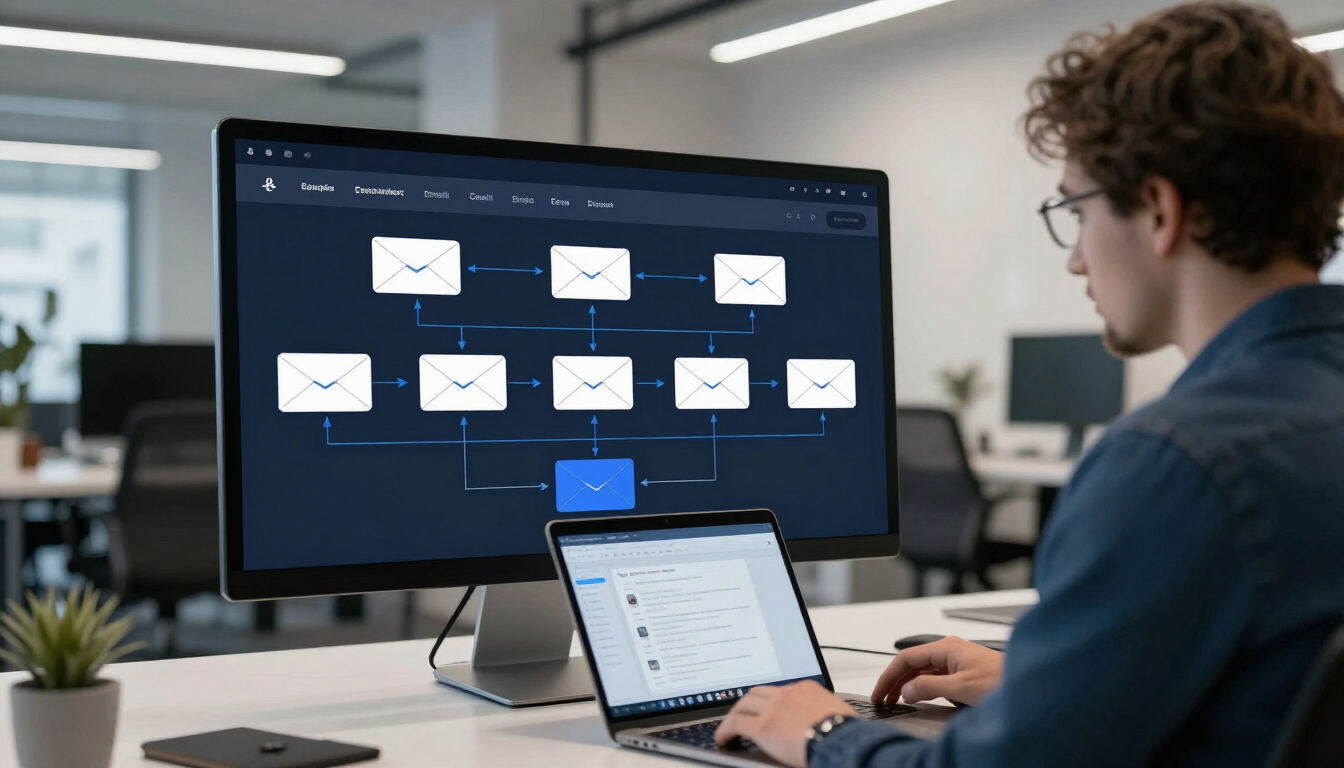
Follow-up is the most underestimated step in email prospecting. Most salespeople send only one email, wait for a reply, and then move on. Yet 80% of replies come after the 2nd or 3rd follow-up. The question isn’t “Should I follow up?”—it’s “How do I follow up without sounding pushy?”
1. How many follow-ups should you send?
Our recommendation: maximum 3 follow-ups for a prospect who hasn’t opened, and 2 for someone who opened but didn’t reply. Beyond that, the effort-to-result ratio collapses and you risk damaging your domain reputation. Each follow-up must bring something new— a different angle, a different question, not just a simple “I’m getting back to you.”
2. The ideal timing between sends
Email 1: Day 0. Follow-up 1: Day +3 (Wednesday if you sent on Monday). Follow-up 2: Day +7. Follow-up 3: Day +14 (“breakup email”). This cadence respects your prospect’s attention span without giving the impression that you’re bombarding them. Tools like Lemlist, Instantly, or Woodpecker let you schedule these sequences automatically.
3. Change the angle with every follow-up
Email 1: present your main value proposition. Follow-up 1: address a specific pain point in their industry. Follow-up 2: share social proof (customer result, concrete figure). Follow-up 3: the breakup email—“I don’t want to bother you. If it’s not the right time, no problem. If you’d like to discuss it later, just tell me.” This last email often generates replies from people who wanted to respond but simply didn’t have the time.
4. Personalize without writing everything by hand
At scale, personalization relies on carefully chosen dynamic variables: prospect name, company, industry, and ideally a contextual line (company news, recently hired role, a LinkedIn post they liked). With Apollo or Lemlist, you can plug these variables into templates and trigger automated sequences based on behaviors (opens, clicks, page visits).
5. What you should absolutely avoid
Never resend the exact same email by simply adding “I hope you don’t mind me following up.” Don’t use an aggressive or guilt-inducing tone (“I assume my email didn’t reach you”). Don’t follow up on weekends or public holidays. And don’t mix hot and cold prospects in the same sequence—messages must be calibrated according to the level of engagement.
Automating follow-ups isn’t spamming—it’s being methodical. A well-built sequence with the right timing and different angles typically generates an average of 30% to 50% more replies than a single email. Automation frees you from manual follow-up and lets you focus on the conversations that matter.